How to Choose a Safe and Licensed Bitcoin Casino in Canada: A 2026 Player's Guide to Responsible Crypto Gambling
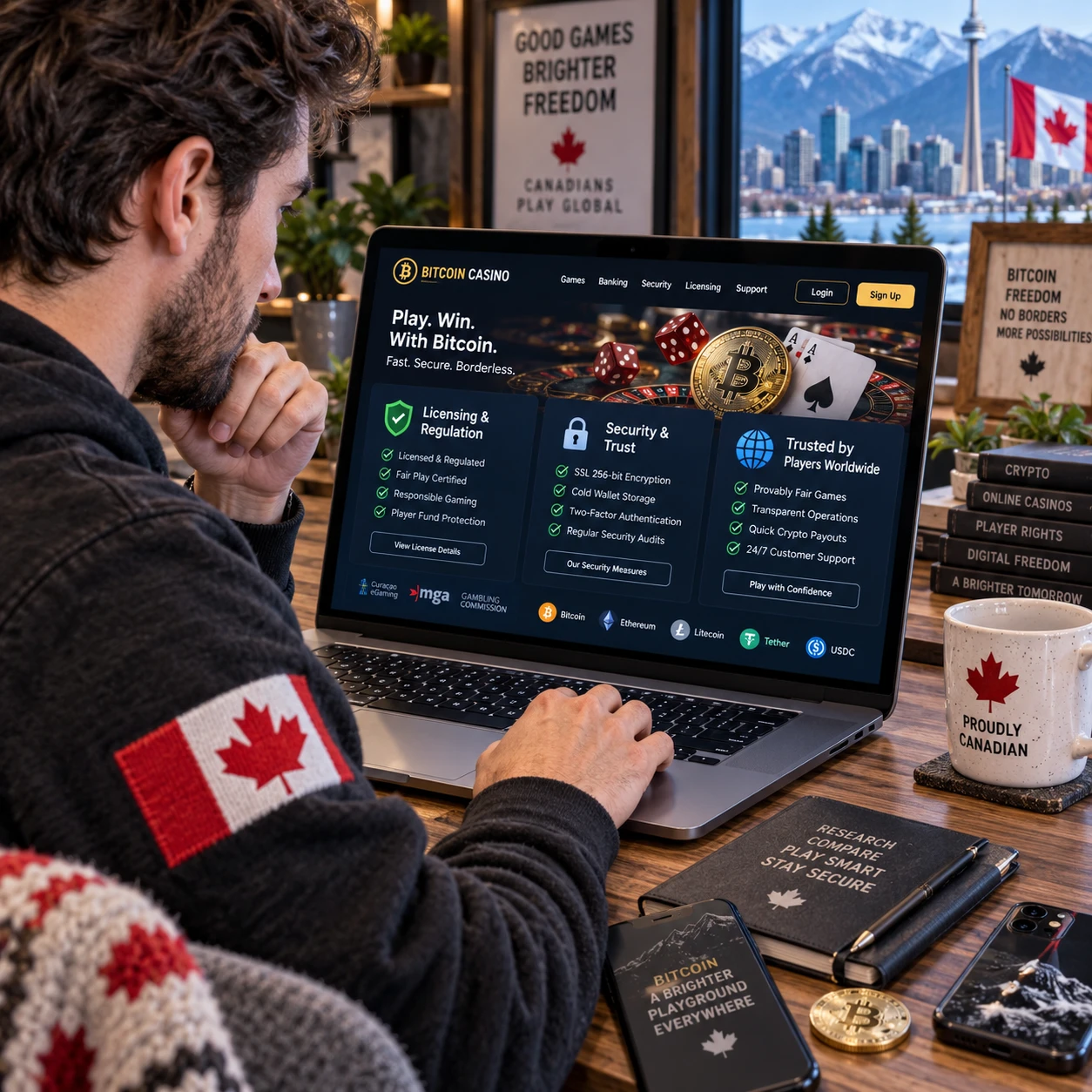
Bitcoin gambling hasn't slowed down for Canadian players in 2026 — the pitch is still the same: fast crypto transfers, instant access to games, no bank waiting around. But speed isn't safety. Those are two different things, and I treat them that way. Before I send any Bitcoin to a casino, I dig into its licensing, its security setup, and its actual reputation (not just the marketing page), then I decide how I'm going to keep my own play inside limits I've set ahead of time. This guide walks through what I check and how I think about crypto gambling responsibly.
What Is a Bitcoin Casino and How Does It Work?
A Bitcoin casino is an online gambling site that takes Bitcoin deposits and, often, pays winnings back in Bitcoin too. You move funds from a crypto wallet into an account, pick a game — slots, table games, whatever the platform offers — and request a withdrawal back to your wallet when you're done. Simple enough on paper. In practice, transaction times and fees swing a lot depending on the platform, the blockchain network itself, and whatever payment provider sits in between. Instant and free? Not always. Sometimes not even close.
Some sites run crypto-only. Others are hybrids, happy to take both cryptocurrencies and regular Canadian dollars. A casino might show your balance in Bitcoin, or it might quietly convert your deposit into another currency behind the scenes — you won't always notice unless you look. I read the cashier page and the terms line by line before sending anything, because conversion rates, fees, minimums, and withdrawal conditions are exactly the kind of detail that gets buried on purpose.
Why Canadian Players Are Turning to Crypto Gambling
Bitcoin transfers are convenient, and some players genuinely prefer not entering card details on a gambling site — I get that. Crypto transactions also leave a public blockchain record, though that alone doesn't make a casino's games or business practices transparent. Pseudonymous isn't the same as anonymous. Exchanges can still require ID verification, and transactions can often be traced back further than people assume.
Fees and processing times still vary, too — a lot. Network congestion, exchange policies, and however the casino handles its own processing queue can all slow a transfer down or speed it up. So for Canadian players, the real question isn't just 'is Bitcoin fast.' It's whether the platform actually explains how its payments work and whether it handles customer funds like a business that intends to keep them safe.
Why Licensing and Regulation Matter
A gambling licence gives you a framework for oversight — but how much that framework protects you depends on the regulator, the scope of the licence, and whether it genuinely covers the operator and the specific games you're playing. Licensed operators are generally expected to follow rules around fair play and complaint handling. That said, a licence isn't a guarantee of flawless service, and it definitely isn't a guarantee of risk-free gambling. No licence does that.
Go unlicensed, and you've got limited recourse if a withdrawal gets held up or a dispute pops up. There's often no real independent complaint process to lean on, and claims about fair random number generators (RNGs) can be nearly impossible to verify from the outside. I always confirm licensing details through the regulator's own records — not by trusting a badge sitting in a website footer, which, let's be honest, anyone can slap on a page.
Key Licensing Bodies Relevant to Canadian Players
Canadian gambling regulation isn't uniform across the country, and that catches a lot of people off guard. Provincial and territorial rules matter here, and some jurisdictions operate or authorize online gambling through their own specific arrangements. So check the rules where you actually live, and confirm whether a given operator is authorized to serve you — not just players 'in Canada' broadly.
- Kahnawake Gaming Commission: A regulator based in Quebec that licenses certain online gaming operations. Check its official records and the specific operator covered.
- Malta Gaming Authority: A well-known international regulator. Verify the operator and licence status directly, and confirm that the licence applies to the service offered to Canadians.
- Curaçao licensing: Curaçao has licensed online gambling operators, but players should verify the current licence and its issuing authority. Do not treat a logo or vague claim as proof of oversight.
No regulator's name should do your homework for you. A licence issued abroad doesn't automatically mean a site is authorized in every Canadian province or territory — that part trips people up more than it should.
How to Evaluate a Bitcoin Casino's Safety and Reputation
Before I create an account or deposit a single satoshi, I run through a practical checklist. It's not glamorous. It works.
- Encryption: Look for a secure connection and clear info about how account and payment data get protected. A padlock icon alone proves... pretty much nothing about trustworthiness.
- Provably fair games: If a site offers this, learn how the verification actually works and whether results can be independently checked. 'Provably fair' needs a real explanation attached — not just a badge or a marketing line.
- Independent testing: Look for named testing or auditing organizations with reports you can actually check, rather than vague claims that 'games are fair, trust us.'
- Transparent terms: Read the bonus, wagering, withdrawal, identity-verification, and account-closure rules before you play — not after you've won something and suddenly need them.
- Reputation and support: Compare detailed reviews from independent sources. Ask customer support one specific question and see if the answer is quick and actually useful.
To judge payout handling, check the published processing times, limits, and fees, then measure those against credible player reports. Reviews can be wrong, or biased, or both — so I look for consistent patterns across many sources rather than hanging everything on one dramatic forum post.
Red Flags to Avoid When Choosing a Platform
- There is no verifiable licence information, or the operator's name does not match the regulator's records.
- The site promises guaranteed winnings, unusually large bonuses, or 'risk-free' gambling.
- Withdrawal requirements, fees, or identity checks are hidden or change without a clear explanation.
- Customer support is unreachable, and complaints repeatedly describe delayed or blocked payments.
- Security and fairness claims cannot be independently checked.
Responsible Gambling Resources for Canadian Players
Even a secure, properly licensed casino can still carry real financial and emotional risk — licensing doesn't erase that. I set a firm spending limit before I ever start playing, use deposit or time limits wherever a platform offers them, and I never gamble with money earmarked for bills or savings. Not negotiable, that one. And if I notice I'm raising my stakes, hiding what I'm doing, or chasing a loss, I stop and look for support instead of treating 'one more deposit' as the fix.
As part of broader due diligence, players looking into gambling awareness and responsible-play initiatives in Canada can look at organizations such as the bitcoin casino. Check any resource directly to understand what it actually does, and lean on established local support services if gambling starts causing harm.
Tools and Support Networks Available in Canada
Plenty of provincial gambling authorities and health organizations offer confidential helplines, self-assessment questionnaires, counselling referrals, and info on self-exclusion. Availability shifts depending on where you live, so search for a service in your own province or territory rather than assuming one national number covers everything. A trusted person, a counsellor, or a community support group can also help someone step back and build an actual plan.
Step-by-Step Guide to Choosing a Safe Bitcoin Casino in 2026
- Verify the licence: Find the operator's legal name and confirm its status with the relevant regulator. Check local rules for your province or territory.
- Check security and fairness: Review encryption, game-testing information, and any provably fair explanation.
- Read independent reviews: Look for recurring reports about withdrawals, account verification, and complaint handling.
- Test customer support: Ask about Bitcoin fees, processing times, and withdrawal requirements before depositing.
- Start small: If you choose to play, begin with an amount you can afford to lose and avoid leaving unnecessary funds in an account.
- Monitor your habits: Use limits and take breaks. Stop if gambling begins to affect your finances, mood, or relationships.
Common Mistakes Canadian Players Should Avoid
Skipping the terms and conditions is probably the single most common mistake — it leads straight to surprises about wagering requirements, maximum cash-outs, or sudden identity checks nobody mentioned up front. I also avoid chasing losses: a losing session is not, by itself, a reason to raise stakes or borrow money, full stop. Another one — sending Bitcoin through an unfamiliar or unregulated exchange without checking its reputation, fees, and security practices first. That's asking for trouble. And finally, I treat extravagant bonus offers with real suspicion, especially when the conditions attached are hard to find or harder to understand.
Frequently Asked Questions
Is Bitcoin gambling legal in Canada?
Rules vary by province and territory, and an operator's legal status can depend on where it's based and who it's actually serving. Check your local laws and official guidance rather than assuming a site accepting Canadian players must be authorized — that assumption gets people in trouble.
How do I verify a casino's licence?
Identify the operator's legal name and licence number, then search the regulator's official website or just contact the regulator directly. Confirm the licence is current and that it actually covers the casino you intend to use — not a sister brand under a similar name.
What should I do if I suspect a scam?
Stop depositing. Save transaction records and any communications, and contact the platform through its official support channel. You can also report concerns to the relevant regulator, a local consumer-protection body, or law enforcement. And never, ever share wallet recovery phrases or send extra funds to 'unlock' a withdrawal — that's always a scam, no exceptions.
How can I gamble responsibly with crypto?
Set spending and time limits, use self-exclusion tools when you need them, and never borrow money or chase a loss. One thing worth remembering: Bitcoin's value fluctuates, so the amount you deposited can change in value completely independent of whatever happens in the game itself.
Choosing a Bitcoin casino in Canada really comes down to weighing licensing, security, payment terms, and your own wellbeing together — not picking whichever one has the flashiest homepage. I verify claims myself, check local rules, and hold to strict limits rather than taking a site's marketing at face value. Careful research and responsible habits won't remove every risk out there. But they do help keep any decision to play informed, and controlled, instead of impulsive.